
Spider Solitaire Online
Local record
Keep the rhythm of every deal
0
Wins
—
Best time
—
Fewest moves
Cleared deals
Wins, best time, fewest moves, and cleared deal numbers are saved only in this browser. They are not attached to an account or copied to another device. Clearing the local record or browser site data removes them.
This cannot be undone. Clear the record stored in this browser?
Build Eight Suited Runs Without Closing the Table
Spider lets any suit build down by rank, but only an unbroken same-suit sequence moves as a group. That difference drives the whole game. Use the ten columns to expose face-down cards, preserve useful landing ranks, and earn an empty column before another stock row covers the work you have already done.
Four Decisions to Make Before Every Move
What does this move uncover?
Count the face-down cards below the moving card. Prefer a move that turns over new information or shortens a column that can realistically become empty.
Will the new stack move later?
A mixed-suit build is legal but cannot travel as one unit. Check whether the move joins a suit or merely creates another section you will have to dismantle.
Which rank will be needed as a landing spot?
Do not consume the only available 8, 7, or other key rank without checking the cards waiting elsewhere. A legal destination can still be strategically expensive.
Is the table ready for another stock row?
Deal only after useful moves are exhausted and every column contains a card. The new row lands across all ten columns and can split sequences you have not finished organizing.
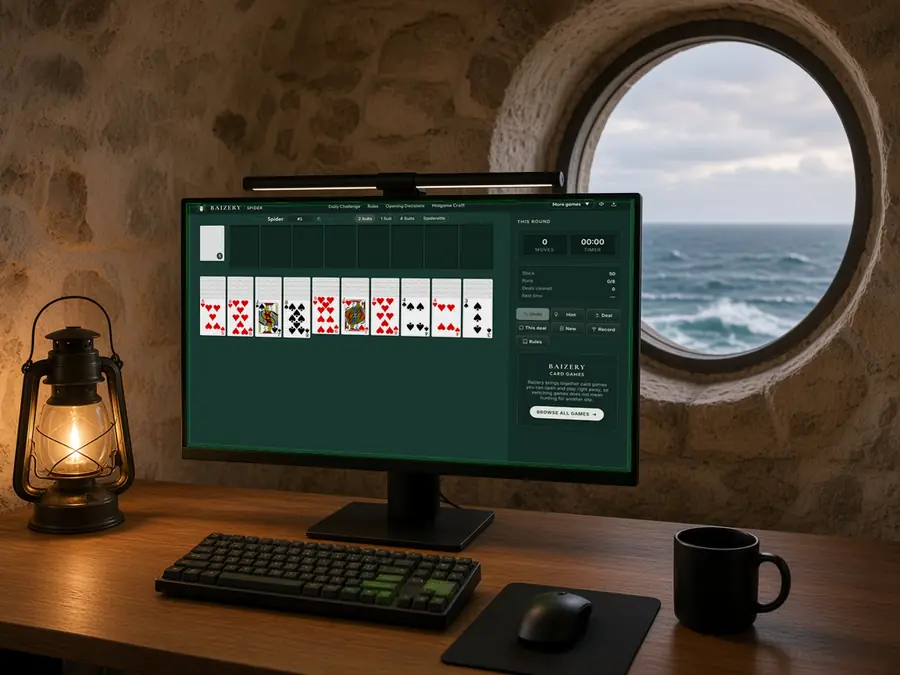
2-suit deal #1: build a suited 4-3 and reveal column ten
The exposed cards include a 4 of spades in column eight, a 4 of hearts in column nine, and a 3 of spades in column ten. Moving the 3 of spades onto the 4 of spades reveals the next card in column ten and preserves a movable suited run. The mixed-suit alternative is legal, but it creates a suit break.
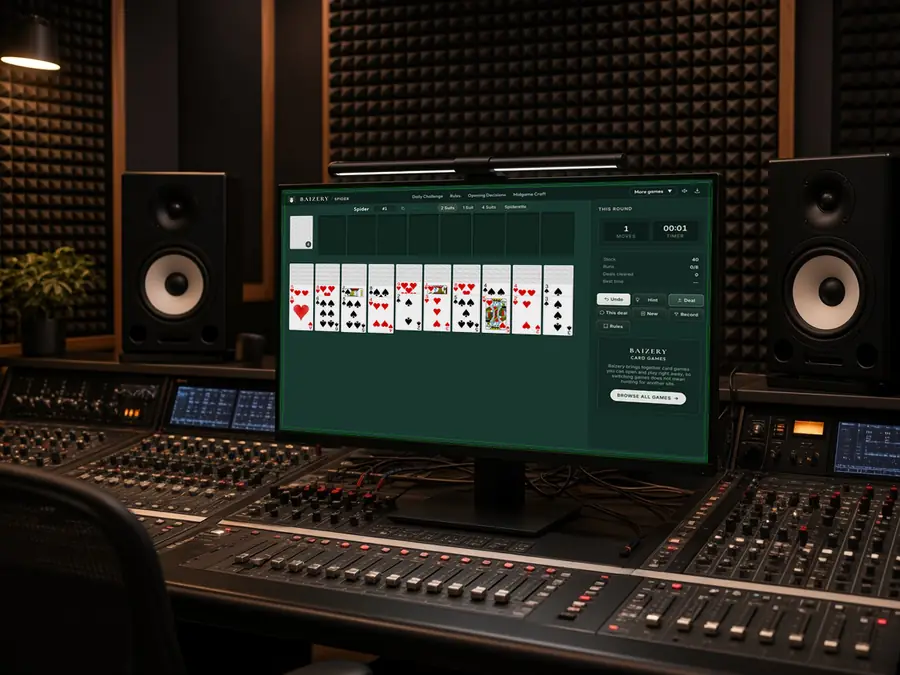
2-suit deal #42: complete the spade K-Q-J first
This opening exposes a King, Queen, and two Jacks of spades, along with legal mixed-suit alternatives. Building the suited K-Q-J reveals two cards and preserves one movable unit. Using the King for an off-suit Queen instead consumes the same landing rank while adding a structural break.
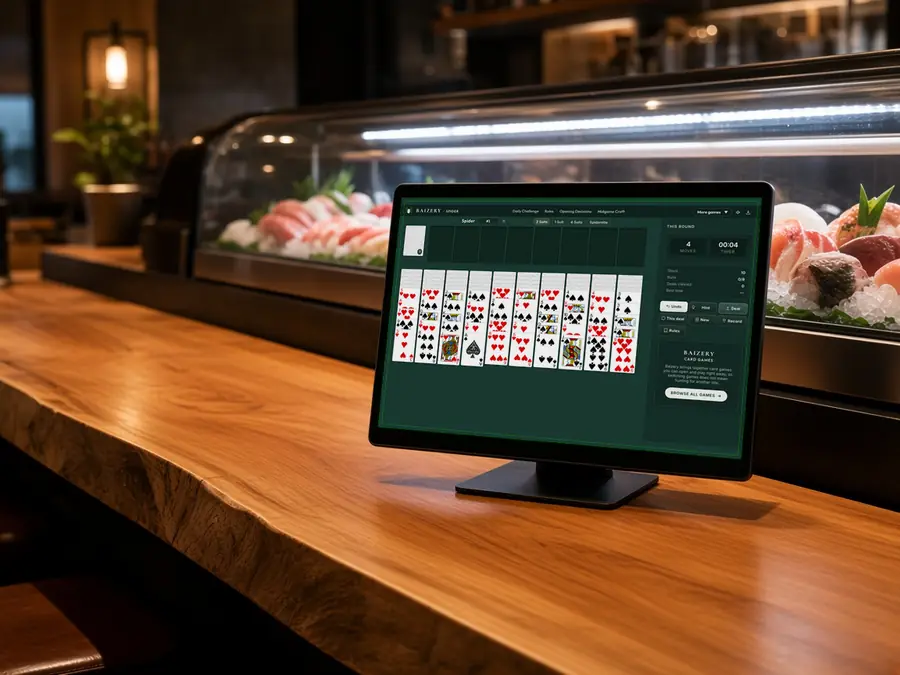
2-suit deal #7: compare three suited moves before choosing
Deal #7 offers three immediate suited connections, and each reveals a card. The correct order depends on the newly exposed landing ranks and whether the resulting K-Q, 9-8, or 5-4 can continue. Replay the number and change only the first move to compare empty-column timing and suit breaks.
Spider Solitaire Rules and Controls
Can different suits be stacked together?
Yes. Any exposed card may land on the next higher rank, regardless of suit. Only a descending run in one suit can move together, so mixed builds usually need to be separated later.
How do I complete a run?
Build thirteen cards of one suit from King down through Ace. The completed run leaves the table automatically. Clear eight runs to win a standard two-deck game.
Why is the stock unavailable?
Spider requires at least one card in every column before dealing. Fill any empty column first. A stock deal then adds one face-up card to each of the ten columns.
What changes between 1-suit, 2-suit, and 4-suit modes?
The layout and movement rules stay the same. Fewer suits make same-suit runs easier to assemble; four suits requires more planning to separate legal mixed builds.
What does Hint do?
Hint evaluates the current position in this browser. The first press marks a suggested source and destination; pressing it again plays that suggestion. It is guidance, not a guarantee that the deal remains winnable.
Where are my progress and records stored?
The unfinished game, wins, best time, and fewest moves are stored in this browser. There is no account or cross-device sync, and clearing site data can remove them.
When should I take the next stock deal?
First complete any useful reveal, suited connection, or reduction in suit breaks. Deal only when every column contains a card and the current tableau no longer offers a meaningful improvement.
How can I tell whether an empty column was used well?
A productive use reveals a face-down card, repairs a suited run, changes the order of two sections, or helps create another empty column. Before filling the space, identify where that card or run can move next.
What is the difference between a numbered deal and the daily challenge?
A numbered deal lets you enter a specific number at any time. The daily challenge assigns a fixed number by UTC date and mode. Both use the same rules and tools.
What do Undo, Replay, and changing the deal number do?
Undo reverses one action. Replay restores the current numbered opening. Entering a different deal number loads another fixed opening; the number does not contain your moves or progress.